01 The idea: contrast, not copies
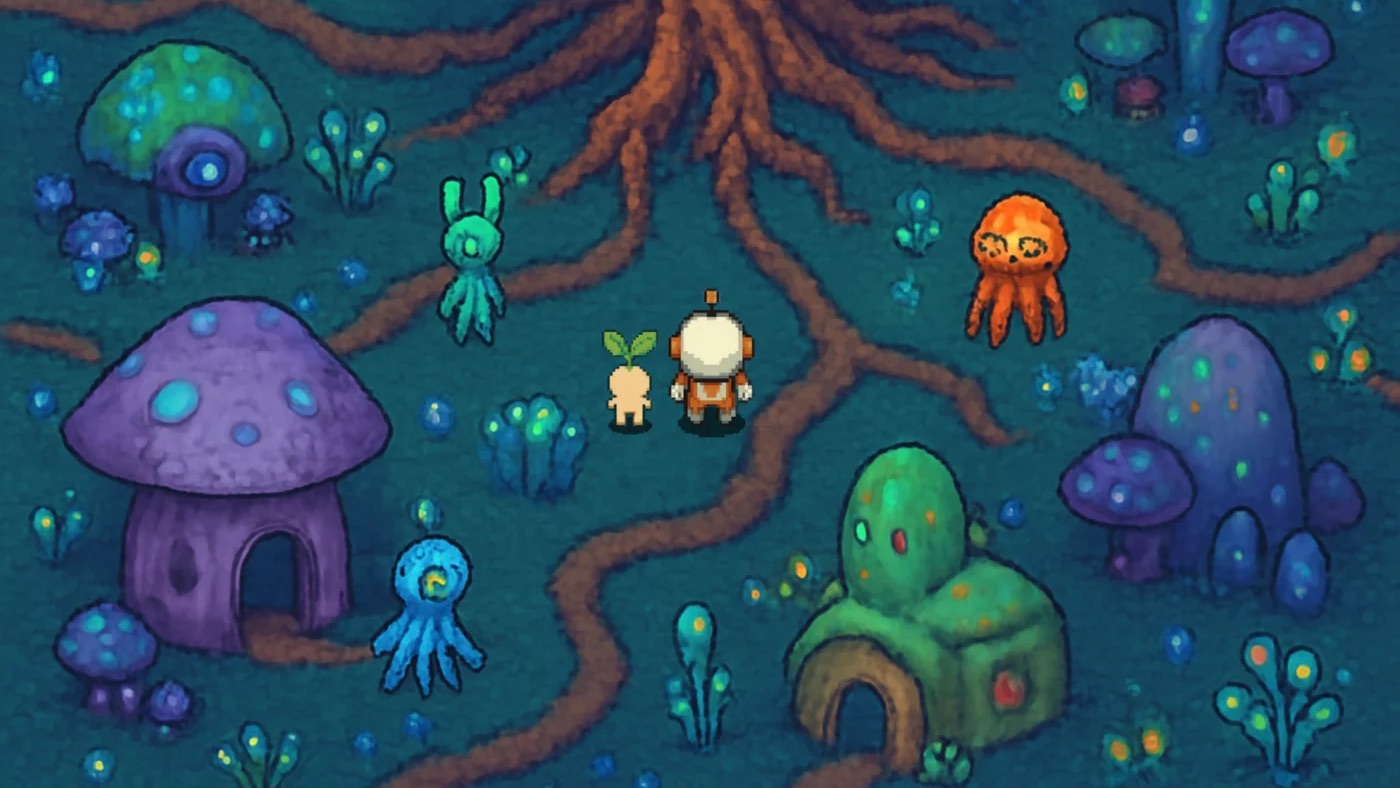
Triends follows an astronaut and Insam, a plant-like companion, crossing a hostile planet together. The core design rule was contrast: one character uses technology, the other uses plant abilities, and progress depends on coordination rather than duplicated actions.
We made it as a two-person team for a contest around the AI asset tool GameAIfy, while serving in the military. Production time was limited, so we had to be selective — a small prototype where character identity, puzzle logic, and readability all support each other.
02 Testing the contrast early
The grey-box prototype answered one question: does the contrast actually work in play? Not just whether two characters could coexist, but whether their abilities created meaningful cooperation, readable interactions, and a world that felt mechanically consistent.
03 Designing the light puzzle
I designed the light-puzzle section around one simple fantasy: Insam transforms into a sunflower and emits light, while the astronaut redirects and splits that light with a mirror.
The goal wasn't just to make it harder over time — it was to build a learning curve that felt fair, readable, and satisfying as the mechanic deepened. The level teaches it in three stages:
- Stage 1Basic light routing — learn that light travels and can be aimed.
- Stage 2Beam splitting — the mirror turns one beam into two.
- Stage 3Tight coordination — both players must understand their own role.
04 AI as rough material, not the result
AI tools gave us quick starting points, but the results weren't usable as final assets. I treated them as rough material and refined sprites frame by frame through manual pixel editing until the characters felt readable, intentional, and consistent in motion.
The plant animation needed different judgment from the human one: petals, stem, and leaves had to move enough to feel alive without becoming noisy during play.